Skip to content

Cart

Your cart is empty

Subscribe to our Newsletter

By joining our community, you will receive stories with soul, latest updates before anyone else, and a glimpse into the daily life of a workshop with over six decades of history.

Article: How to String a Classical Guitar: Step-by-Step Guide

cuerdas

How to String a Classical Guitar: Step-by-Step Guide

Changing the strings on your classical guitar is essential for maintaining its tone, projection, and playing comfort. While it may seem complicated at first, with the right technique and a bit of patience, you’ll ensure your instrument sounds its best and stays in optimal condition. Here’s a complete, step-by-step guide rooted in Spanish luthier tradition to help you master the process.

What You Need

  • A set of new classical guitar strings (nylon, not steel)
  • String winder (optional, but helpful)
  • Wire cutters or pliers
  • Soft cloth (to protect the guitar’s top)
  • Tuner

Preparation: Before You Begin

  • Change one string at a time. This keeps tension on the neck and helps you remember how each string is tied.
  • Protect the guitar’s top with a cloth or thick paper to prevent scratches from string ends.
  • Never cut strings under tension—always loosen them first to avoid damage or injury.

Step 1: Remove the Old String

  • Loosen the string using the tuning peg until it is slack.
  • Unwind the string from the tuning post and gently untie it from the bridge.
  • Remove the string completely and set it aside.

Tip: If you’re only replacing a broken string, start with that one. But for best results, change all six strings regularly, especially if you play often or perform.

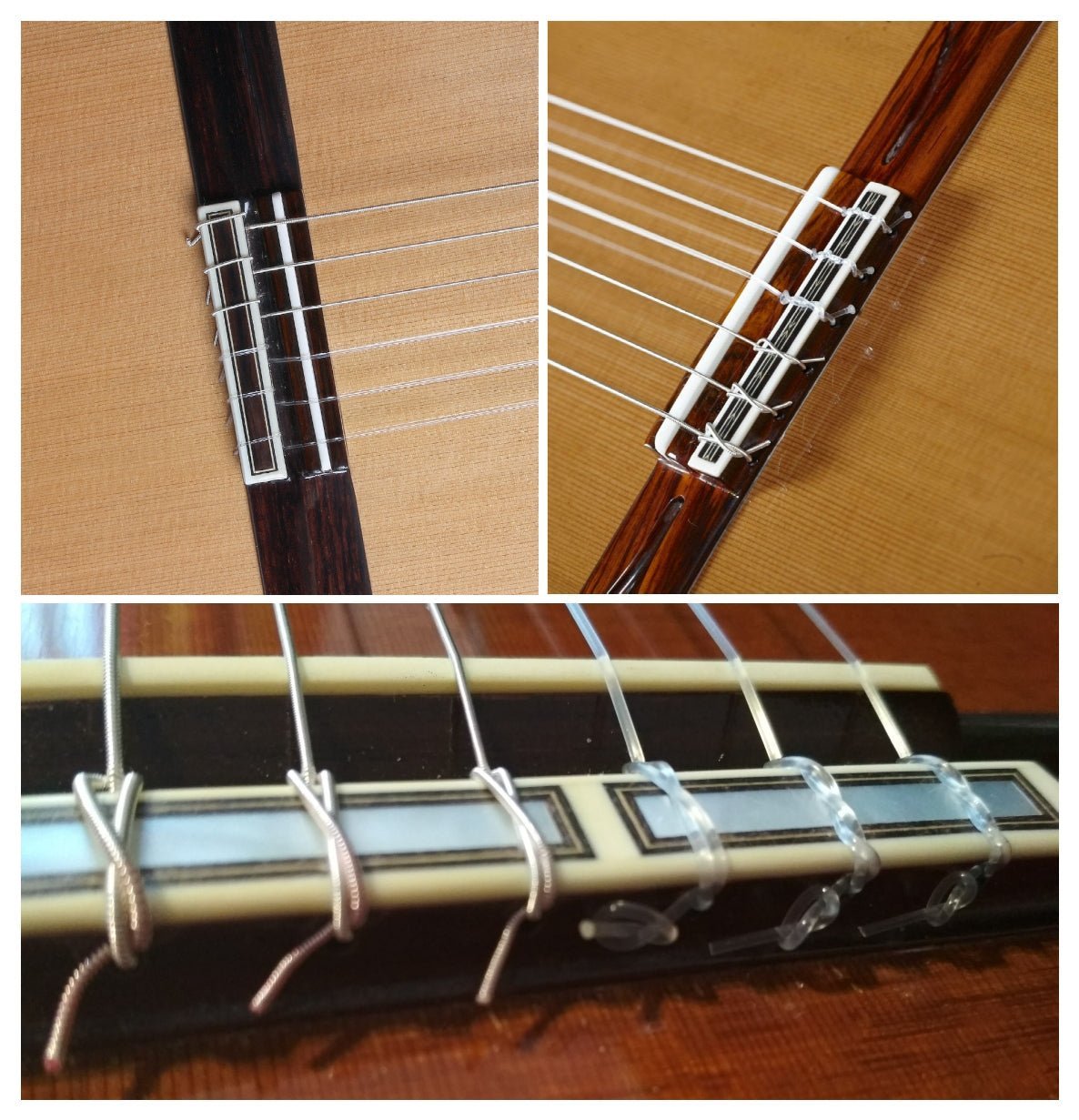
Step 2: Tie the New String at the Bridge

Classical guitars use a tie-block bridge, so a specific knot is required to secure the string.

Step 3: Secure the String at the Tuning Peg

  • Insert the free end of the string through the hole in the tuning peg.
  • Loop the string back over itself and under, then pull tight to create a secure knot.
  • Begin winding the string, ensuring the wraps are neat and spiral downward. For bass strings, wind toward the outside of the headstock; for trebles, wind toward the inside.
  • Maintain gentle tension as you wind to prevent slack and ensure tuning stability.

Tip: Use a string winder for faster, more consistent winding.

Step 4: Tune and Stretch

  • Bring the string up to pitch using a tuner, but do not overtighten.
  • Gently stretch the string by pulling it away from the fingerboard and retune. Repeat several times to help the string settle and stay in tune more quickly.
  • Trim any excess string at the bridge and headstock with wire cutters.

Step 5: Repeat for All Strings

Change each string one at a time, following the same process. The recommended order is: sixth (low E), third (G), fifth (A), second (B), fourth (D), and finally first (high E). This order helps balance tension and makes the process smoother.

* Watch the full video (option 1)

* Watch the full video (option 2):

Final Recommendations

  • Change strings regularly, at least every few months, or more often if you play daily or perform.
  • Wipe down your guitar and fretboard with a soft cloth before installing new strings.
  • Store your guitar in a suitable case and use a humidity control system for optimal care.
  • For more information on string selection, visit our classical guitar string collection.

Learning how to string a classical guitar is a rite of passage for every guitarist. With careful technique and respect for your instrument, you’ll enjoy better tone, tuning stability, and the satisfaction of caring for your guitar with your own hands. If you have questions or want to share your own tips, join the conversation in the comments or contact our specialist team.

Frequently Asked Questions

How often should I change classical guitar strings?

For those who play regularly, every 1 to 3 months is typical. Beginners can change them twice a year, but always replace them if they sound dull or feel rough.

How long do new strings take to settle?

Nylon strings can take anywhere from a few hours to several days to stretch and stabilize. Frequent tuning during the first days is normal.

How do I choose the right strings?

Select strings according to your guitar’s scale length, your playing style, and your desired tone. Tension (low, normal, high) affects feel and sound—experiment to find what suits you best.

Are you still hungry for more?

KEEP READING

¿Qué es un laúd? Significado, historia, tipos y diferencias - Alhambra Guitarras
laud

What Is a Lute? Meaning, History, Types & Differences

The lute is one of the most iconic and historically rich string instruments in world music. Instantly recognizable for its deep, rounded back and pear-shaped body, the lute has played a central rol...

Read more
Las mejores cuerdas para guitarra clásica - Alhambra Guitarras
cuerdas

Best Classical Guitar Strings: For Professionals & Beginners

The choice of classical guitar strings is key to unlocking your instrument’s full potential. Whether you’re an experienced concert performer, a dedicated student, or a passionate beginner, the righ...

Read more

Blog posts

¿Cuáles son las diferencias entre una guitarra clásica y una guitarra flamenca? - Alhambra Guitarras
clasica

What Are the Differences Between a Classical Guitar and a Flamenco Guitar?

The difference between a classical guitar and a flamenco guitar lies not in their appearance, but in the physics of sound and the architecture of the instrument. Whilst the classical guitar optimis...

Read more
10 diferencias entre guitarras diestras y guitarras zurdas - Alhambra Guitarras
diestra

10 differences between right-handed and left-handed guitars

Did you know that a left-handed guitar isn't just a right-handed guitar turned upside down? Discover the real differences in the nut, internal bracing, and bridge.

Read more
hombre con acustica alhambra
acústicas

Types of acoustic guitars and how they differ

Discover the different types of acoustic guitars (Dreadnought, Concert, Parlor, Jumbo). Learn about their shapes, sounds, strings, and how to choose the right one for you.

Read more
Guitarra clásica vs guitarra acústica: ¿cuáles son sus diferencias y cuál elegir? - Alhambra Guitarras
acústicas

Classical guitar vs acoustic guitar: what are the differences and which one should you choose?

Classical or acoustic guitar? We compare nylon vs. steel strings, tension, and neck width to help you make the best buying decision.

Read more
Mejores guitarras clásicas calidad-precio: 500, 1.000 y 2.000 euros - Alhambra Guitarras
alhambra guitarras

Best value-for-money classical guitars: 500, 1,000, and 2,000 euros

Buyer's guide to the best classical and Spanish guitars by price range: from 500 to 2,000 euros. Find the ideal model for your level!

Read more
Las 5 mejores guitarras clásicas españolas por menos de 500 euros - Alhambra Guitarras
guitarras de menos de 500 euros

The 5 Best Classical Spanish Guitars Under 500 Euros

Looking for a great guitar without overspending? Compare the best classical and Spanish guitars under 500 euros with a solid top.

Read more
La guitarra en verano: tu mejor terapia de desconexión - Alhambra Guitarras
verano

Summer and the Classical Guitar: Your Ultimate Way to Unwind

Summer is the perfect time to slow down and reconnect. Discover how the classical guitar and its warm sound become your best therapy to relax, release stress, and enjoy your holidays with peace of ...

Read more
Tipos de guitarras clásicas y españolas que debes conocer - Alhambra Guitarras
Aprender a tocar guitarra

Types of Classical and Spanish Guitars You Should Know

Discover the different types of classical and Spanish guitars. Learn about their features, sizing variations, guitar necks, and types of strings.

Read more
Las mejores guitarras para zurdos principiantes - Alhambra Guitarras
guitarras para zurdos

The Best Left-Handed Classical Guitars for Beginners

Are you left-handed and want to start playing the guitar? Compare the best classical and Spanish guitar options specially designed for left-handed beginners.

Read more