What Are the Differences Between a Classical Guitar and a Flamenco Guitar?

The difference between a classical and a flamenco guitar lies not in the wood color, but in the acoustical physics that each luthier pursues. If you are torn between the two for fear of making the wrong choice, the short answer is that the classical guitar pursues sustain and harmonic purity, while the flamenco guitar prioritizes attack and speed.
Are Spanish, Classical, and Flamenco Guitars the Same? (A Very Common Question)
No. Spanish guitar is the umbrella term encompassing both classical and flamenco guitars—two branches with distinct acoustic engineering. Confusing them is the most common mistake made when researching before buying a first instrument.
The Origin of the Term and the 'Criolla' Variant in Latin America
The name was consolidated in the 19th century thanks to the luthier Antonio de Torres, who established the 650 mm scale length and body shape we still use today. In much of Latin America, this same nylon-string family is called the "guitarra criolla," though it shares an identical anatomy. If you wish to dive deeper into its distinguishing features, read our article on the flamenco guitar and its characteristics.
The 5 Fundamental Technical Differences
Before comparing figures, it is important to understand that every choice of wood, dimension, or accessory serves a specific acoustic purpose, rather than being a mere aesthetic tradition.
1. Tonewoods and Construction: The Myth of Cypress and the Flamenco Negra
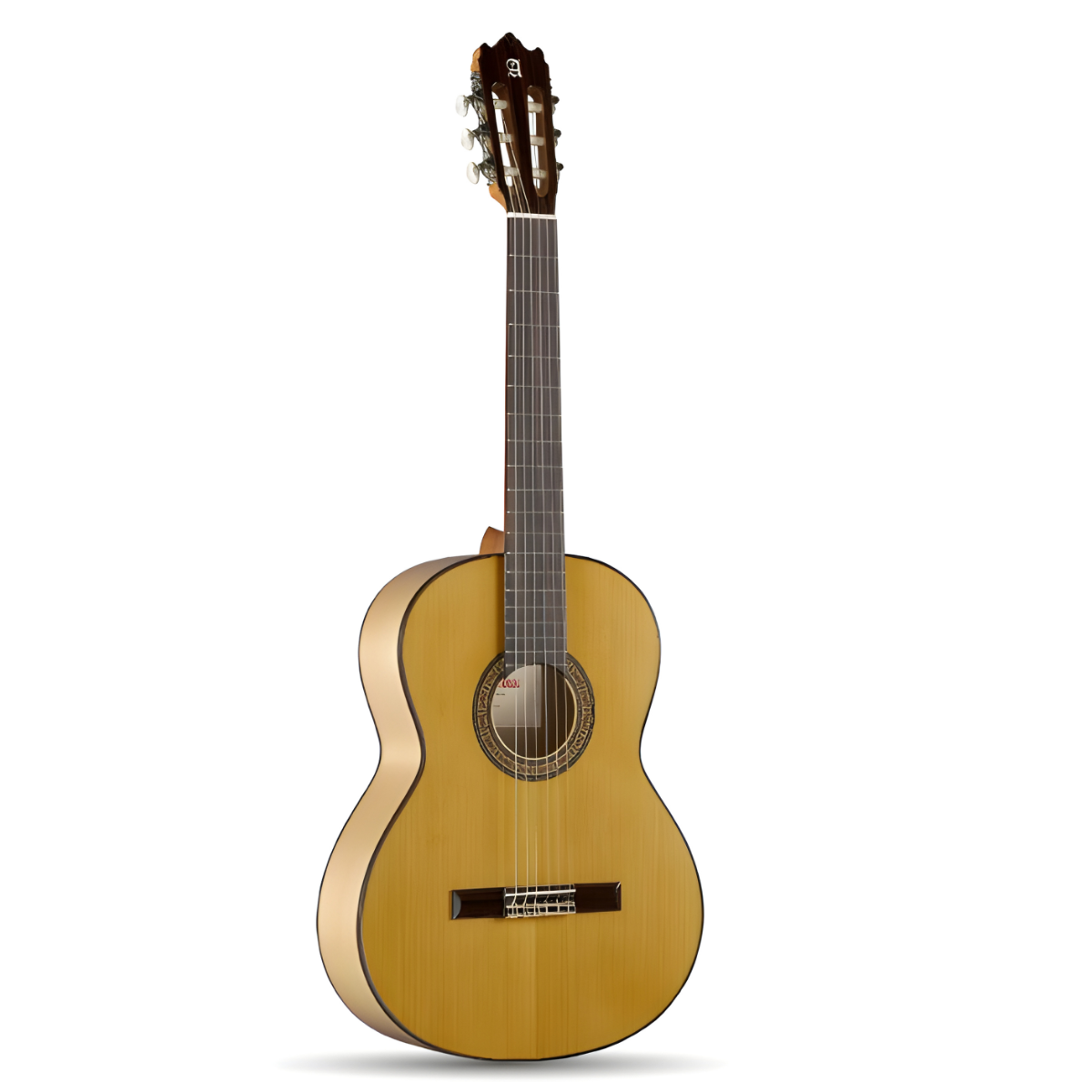
The traditional flamenco guitar is built using Spanish cypress, a lightweight tonewood that delivers that characteristic bright, dry timbre. In our workshops, we select certified cypress and rosewood depending on the model, crafting both the "flamenco blanca" and the "flamenco negra"—the latter designed for soloists seeking more body without losing agility.
The classical guitar uses rosewood or walnut for the back and sides—dense woods that foster internal reverberation and a rounded tone. The soundboard is usually spruce or cedar, a decision that defines whether the instrument's character is warm or luminous. Discover these options in our classical guitar collection.
2. Body Depth, Weight, and Ergonomics
A classical guitar body measures between 95 and 100 mm in depth—a larger air volume that enhances bass frequencies and sustain. The flamenco guitar reduces this depth to 90–95 mm, gaining lightness and immediate response.
These few millimeters make a noticeable difference when playing. A narrower body allows for extended strumming sessions without arm fatigue—a feature deeply appreciated by those accompanying "cante" for hours on end.
3. String Action: Why Fret Buzz Is Not a Defect
The string action on a classical guitar is around 4 mm at the 12th fret (6th string), whereas on a flamenco guitar it lowers to 2.8–3 mm. This proximity to the fretboard creates the well-known fret buzz or "cerdeo" in the flamenco world—a slight metallic brush of the string against the fret.
In classical guitar lutherie, this buzz is considered a setup flaw. In flamenco, it is quite the opposite: it is the instrumental "quejío," a raspy nuance intentionally sought after by guitarists to add character to their playing.
4. Internal Bracing: Sustain vs. Percussion
The bracing—the strut framework under the soundboard—determines how long a note vibrates. On a classical guitar, it is symmetrical and parallel, designed to prolong sound. On a flamenco guitar, it is lighter and asymmetrical, engineered to damp vibration and maximize percussive attack.
5. The Tap Plate (Golpeador): Essential Armor for the Flamenco Guitarist
The tap plate protects the soundboard from rhythmic strikes using nails and knuckles—a technique absent from classical repertoire. Hence, classical guitars dispense with it, avoiding any added mass that might dampen the wood's natural vibration.
Comparative Table of Technical Differences
|
Feature |
Classical Guitar |
Flamenco Guitar |
|
Body Depth |
95–100 mm |
90–95 mm |
|
Action at 12th Fret |
Approx. 4 mm |
2.5–3 mm |
|
Typical Tonewoods |
Rosewood, Walnut, Cedar |
Spanish Cypress (or Rosewood for Flamenco Negra) |
|
Bracing Pattern |
Symmetrical, favors sustain |
Light & asymmetrical, favors attack |
|
Tap Plate (Golpeador) |
None |
Yes, essential |
Reading the table as a whole, the conclusion is clear: every millimeter of body depth, every gram of wood, and every fraction of action serves a specific acoustic purpose, rather than a trend. Choosing correctly means identifying what sound your repertoire requires.
The Headstock Angle Myth Uncovered
Many online forums claim that classical headstocks are always straighter and flamenco headstocks more angled, but this rule is not universal. Headstock pitch depends on the neck angle chosen by each luthier and the desired string tension.
In the 20th century, several design variations were introduced before settling on the 650 mm scale length as the gold standard. In our workshop, we adjust this angle instrument by instrument, ensuring that low action never compromises intonation. You can also consult our historical review on the evolution of the classical guitar for further insight.
Bossa Nova, Jazz, and Polyphonic Repertoire
If you seek sustained chords with simultaneous melody and basslines, the classical guitar is your ally. Its sustain allows notes to intertwine without losing body—essential for jazz. Check out our 4/4 full-size guitars and our tips to improve your classical guitar playing.
Rumba, Bulerías, and Vocal Accompaniment
If your goal is to accompany "cante" or execute fast rumbas, the flamenco guitar handles picados and rasgueados far better. Explore our range of flamenco guitars and compare action and weight before making your choice.
Frequently Asked Questions - FAQs
Why does a flamenco guitar produce fret buzz, and what is its aesthetic purpose?
It occurs because the string action is set very low, causing the string to lightly graze the frets when vibrating. Aesthetically, it imparts a metallic, raspy quality akin to the "quejío" in flamenco singing, intentionally sought after by "tocaores."
What technical differences exist between a Flamenco Blanca and a Flamenco Negra guitar?
The "blanca" uses Spanish cypress, making it lightweight and bright; the "negra" incorporates rosewood back and sides, adding body and projection while maintaining the low action and ergonomic comfort typical of flamenco.
How do the neck angle and action height influence guitarist ergonomics?
A steeper neck angle allows luthiers to lower the action without losing proper tuning and intonation, reducing left-hand fatigue. This facilitates rapid picado runs, though it demands meticulous precision setup from the maker.
Is it possible to play classical repertoire on a flamenco guitar without sacrificing tone quality?
It is possible but limited: shorter sustain dampens notes prematurely, and fret buzz can blur slow passages. For concert classical pieces, the classical body volume and bracing yield far superior results.
How to Test and Decide on Your First Guitar
After comparing tonewoods, action, and bracing, the final decision comes down to one simple, honest question: what music do you want to play tomorrow morning? That answer matters more than any spec sheet.
If your heart is set on "compás" and "cante," experience the sound of our Alhambra 3F, designed to support your growth from your very first chord.
Still unsure which model fits your touch or repertoire?
-
Discover our beginner guitars to find the perfect match for you
-
If you have questions, write to us via our contact form and we will be glad to help.