Skip to content

Cart

Your cart is empty

Subscribe to our Newsletter

By joining our community, you will receive stories with soul, latest updates before anyone else, and a glimpse into the daily life of a workshop with over six decades of history.

Article: The guitarist and the dimensions of the Spanish guitar

The guitarist and the dimensions of the Spanish guitar

The short-scale Spanish guitar is the most common for guitarists. It measures 650 mm from saddle to nut.

It's important to know the measurements of a Spanish guitar, firstly to know which one best suits the guitarist's physical condition, and secondly, to know if it's suited to the style of music they want to play.

Long and short scale lengths have always been the most common scale lengths used by guitarists on the Spanish guitar. As mentioned above, the short scale length is 650 mm between the saddle and nut , and is the most commonly used length today.

The Spanish guitar's long scale has several versions, the most common being 664 mm and 660 mm . One centimeter, or 1.4 centimeters, seems like a seemingly minimal difference, but it matters when playing.

It is also quite common to find a 640 mm scale, a dimension that makes it easier for guitarists with small hands to play.

The dimension of the nut

The width of the nut, also known as the neck, is closely related to the size of the hands and the style of music being played. On the Spanish guitar, we normally find a dimension of 52 mm . This is the most common nut size today. For guitarists with larger hands, the nut can be one millimeter larger, reaching 53 mm .

On the contrary, for greater comfort and speed, especially when changing chords, as long as the fingers fit, we find 50 mm or 48 mm nuts .

At Alhambra Guitars, these nut sizes are available on cutaway and crossover models . The latter feature a very versatile design that allows for playing a multitude of styles. On the other hand, on acoustic guitars , the nut size is 44 mm.

The action of the strings.

Another important factor to consider is string action. This measurement is the distance between the top of the fret and the bottom of the strings. It's typically measured at the 12th fret and the sixth string.

On beginner, flamenco , and acoustic instruments, this action is lower. On Spanish concert guitars, the action is the highest, usually around 5 mm.

The proportionality of the instrument.

Finally, it's interesting to note the instrument's proportionality. The midpoint of the scale is located exactly at the 12th fret . If we were to divide the scale into four parts, the points that mark the different sections are: the 5th fret, the 12th fret, approximately the center of the soundhole, and the saddle.

The 7th fret is equivalent to a third of the scale. These are very important points for guitarists to keep in mind when creating harmonics. But we'll talk about that in future posts.

Are you still hungry for more?

KEEP READING

Varetaje Guitarra Clásica: Un Viaje a Través de sus Secretos Acústicos - Alhambra Guitarras

Classical Guitar Bracing: A Journey Through Its Acoustic Secrets

Discover the evolution of bracing in classical guitars. Its influence on sound, the woods used, and tuning crucial for exceptional tonal quality.

Read more
Clasificación de guitarras: Una guía completa para elegir el instrumento perfecto - Alhambra Guitarras

Guitar Ratings: A Complete Guide to Choosing the Perfect Instrument

When choosing a guitar, it's essential to understand the different classifications to find the perfect instrument that suits your needs and skill level.

Read more

Blogbeiträge

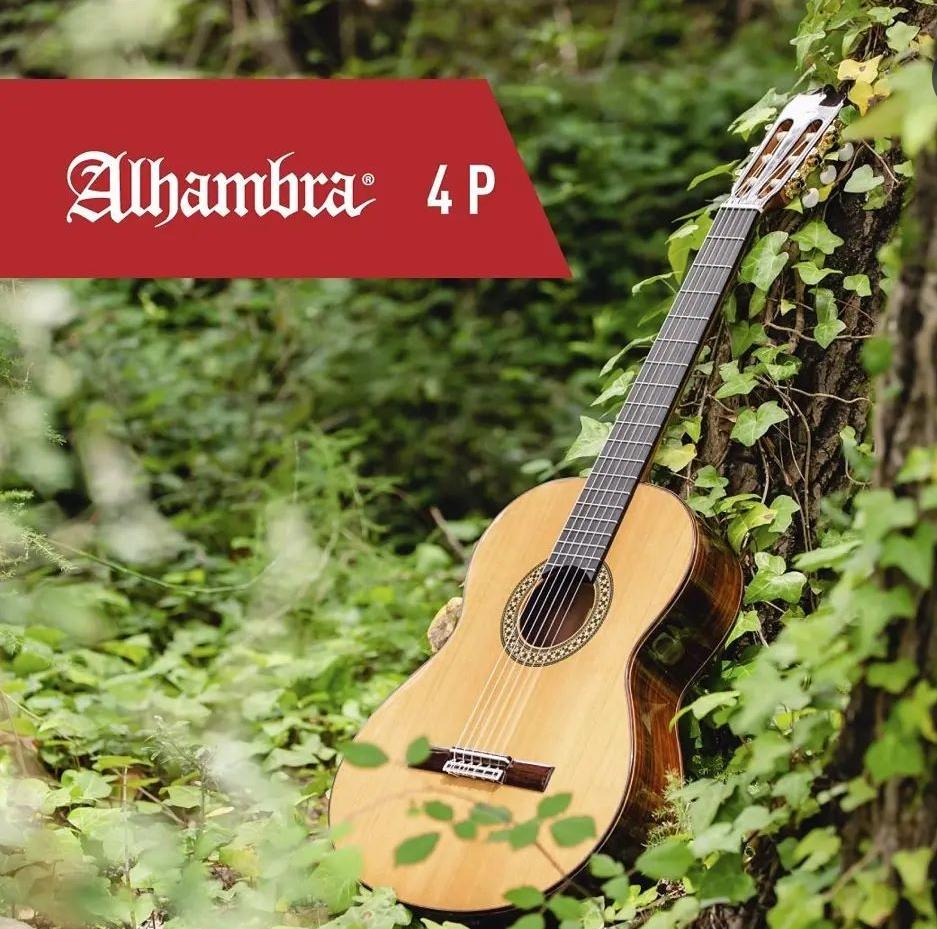
ALhambra 4P
Alhambra 4P

Alhambra 4P: Technical Analysis of the Advanced Classical Student Guitar for Conservatories

Alhambra 4P review for the transition to intermediate conservatory studies. We evaluate the impact of the ebony fretboard, Indian rosewood sides, and Muro de Alcoy craftsmanship under intensive pra...

Read more
Alhambra Guitarras- artesania
acústica

The Engineering of the Soundboard: Energy Transfer from the Bridge to the Wood

In high-end guitar-making, the soundboard is not merely a passive piece of wood: it is the instrument’s acoustic engine. The strings alone do not displace enough air to project sound into a room; i...

Read more
¿Cómo elegir el sonido de tu guitarra? Guía para encontrar tu timbre perfecto - Alhambra Guitarras
artesanía

How to Choose Your Guitar Tone: A Guide to Finding Your Perfect Sound

Choosing the sound of your guitar is as much an acoustic decision as an emotional one. In this guide, we show you how to evaluate tone, projection, and sustain through the selection of fine tonewoo...

Read more
alhambra guitarras feat. master Hiroshi playing his Alhambra Guitar in Alcoy
guitarras profesionales

The Best Classical Guitars for Professionals: Excellence and Master Craftsmanship

Finding the perfect professional classical guitar is a crucial decision for any concert artist or soloist. Discover what defines a high-end instrument, from the selection of fine tonewoods to innov...

Read more
Mejores guitarras 3/4: la guía técnica definitiva para acertar con la cadete - Alhambra Guitarras
3/4

Best 3/4 Guitars: The Definitive Technical Guide to Choosing the Right Junior Guitar

Discover how to choose the best 3/4 guitars in 2026–2027. We break down real measurements, key materials like solid tops, and top models like Alhambra Cadete so you can make the right choice based ...

Read more
Las Mejores Guitarras Flamencas: Guía de compra recomendada - Alhambra Guitarras
flamenca

The Best Flamenco Guitars: Recommended Buying Guide

Buying a guitar that’s either above or below your actual level not only strains your budget, but also holds back your technical progress. From the narrow body and low action (2.5–3.0 mm) to the cru...

Read more
¿Cuáles son las diferencias entre una guitarra clásica y una guitarra flamenca? - Alhambra Guitarras
clasica

What Are the Differences Between a Classical Guitar and a Flamenco Guitar?

The difference between a classical guitar and a flamenco guitar lies not in their appearance, but in the physics of sound and the architecture of the instrument. Whilst the classical guitar optimis...

Read more
10 diferencias entre guitarras diestras y guitarras zurdas - Alhambra Guitarras
diestra

10 differences between right-handed and left-handed guitars

Did you know that a left-handed guitar isn't just a right-handed guitar turned upside down? Discover the real differences in the nut, internal bracing, and bridge.

Read more
hombre con acustica alhambra
acústicas

Types of acoustic guitars and how they differ

Discover the different types of acoustic guitars (Dreadnought, Concert, Parlor, Jumbo). Learn about their shapes, sounds, strings, and how to choose the right one for you.

Read more