Article: Crossover Guitars: The Fusion of Acoustic Ergonomics and Nylon Timbre
Crossover Guitars: The Fusion of Acoustic Ergonomics and Nylon Timbre
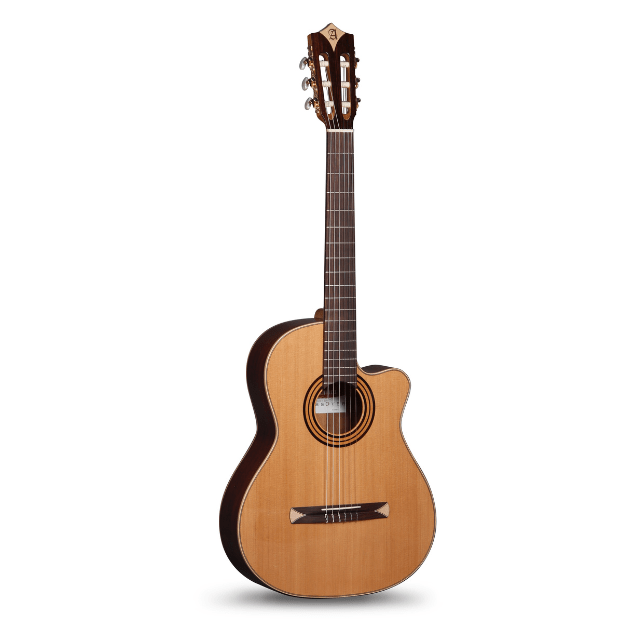
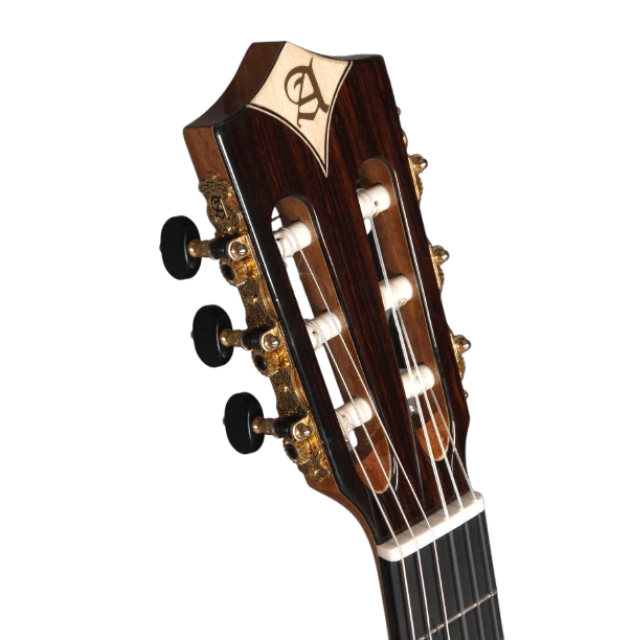
The Crossover guitar is a hybrid design instrument that combines the acoustic physics of nylon-string guitars with the ergonomic neck geometry typical of steel-string or electric guitars.

It is neither a classical guitar with a cutaway nor an acoustic guitar with plastic strings: it is a constructive category developed for musicians who demand the flexibility of modern repertoire (pop, jazz, bossa nova, flamenco fusion) without the physical resistance of the traditional wide nut.
Comparison Chart: Crossover vs. Classical vs. Steel-String Acoustic
| Technical Specification | Crossover Guitar | Traditional Classical Guitar | Acoustic Guitar (Steel Strings) |
| Nut Width | 48 mm (Intermediate ergonomics) | 52 mm (Wide and flat) | 43 mm - 44.5 mm (Narrow) |
| Fretboard Profile | Slight ergonomic curve) | Flat | Very Radiused |
| String Material | Nylon / High or Medium Tension | Nylon | Bronze / Phosphor (High tension) |
| Access to High Frets | Standard ergonomic cutaway | No cutaway (Except specific cutaway models) | Standard cutaway |
| Preamp / Electrification | Built-in Fishman / E9 preamp | Optional |

The 4 Key Design Features of the Crossover Guitar
1. Narrower nut width (48 mm)
Reducing the nut width from 52 mm to 48 mm allows for playing complex barre chords, jazz extensions, and fast fingerings with less muscle fatigue. It makes the transition immediate for guitarists coming from electric or acoustic guitars.
2. Radiused fretboard for fluid barre chords
The fretboard of a Crossover is not flat. It incorporates a subtle radius that adapts to the hand's natural anatomy when closing the fist. This eliminates the excessive pressure needed to press the strings at the first fret and makes open chords buzz-free.
3. Narrow body and cutaway design
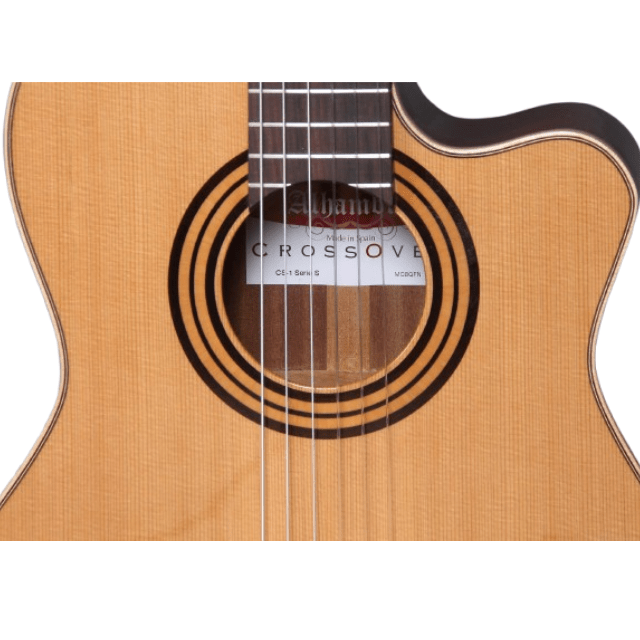
The depth of the soundbox is usually adjusted (narrow body or thin body) option to mitigate feedback (feedback) during live performances with amplification. The cutaway allows clean access to the treble area of the fretboard up to the 19th fret.
4. Optimized bracing for amplification
The internal bracing system is balanced to offer a fast attack response and a neutral frequency balance, optimized to work in harmony with high-fidelity preamps (such as Fishman systems with piezoelectric and internal microphone).
Woods and Sound: The Luthier's Signature
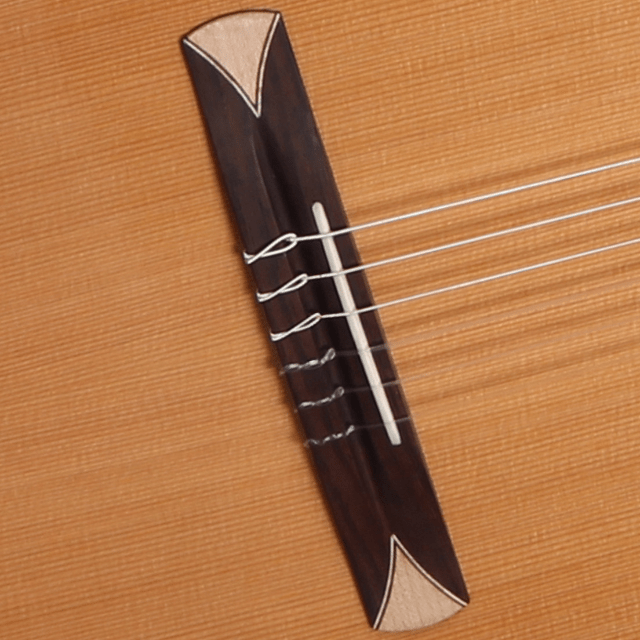
Despite its modern vocation, a high-end Crossover maintains the construction principle using the Spanish heel in the Muro de Alcoy workshop:
-
Solid Cedar or Solid Spruce top: It maintains the warmth and sweetness of the nylon timbre.
-
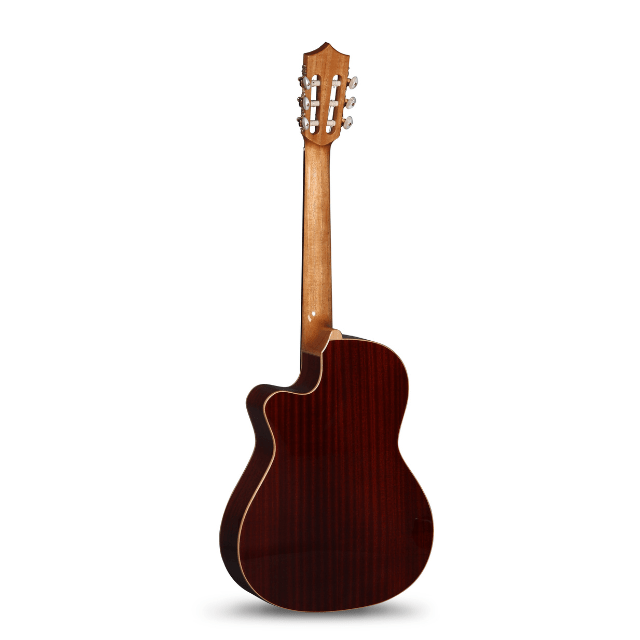
Pau Santo or Macassar back and sides: They provide richness in harmonics, clean projection, and presence in the lows.
-
Samanguila neck with Ebony reinforcement: It guarantees structural stability and fast vibrational transmission.

Frequently Asked Questions about Crossover Guitars (FAQ)
Can steel strings be put on a Crossover guitar?
Never (Unless it is a specific model for that, such as the Alhambra CSs3 Cw E9).
Crossover guitars are structurally built and braced for the tension of nylon strings. Applying steel strings would generate an excessive tension that would pull off the bridge and irreversibly bend the neck.
For what type of guitarist is a Crossover designed?
It is the ideal instrument for:
-
Electric or acoustic guitarists who need to record or tour with the sound of nylon strings without changing their left-hand technique.
-
Live musicians and session bands (pop, latin jazz, bossa nova, vocal accompaniment) who require flexibility and resistance to feedback.
-
Classical guitarists who seek greater physical comfort in prolonged performances or easy access to high frets.
![]() What is the difference between a Crossover and a standard Classical Cutaway?
A standard classical cutaway maintains the 52 mm nut and the traditional flat fretboard. The Crossover modifies the basic neck geometry (48 mm and radiused fretboard), offering a completely different feel.