Vai al contenuto

Articolo: How to String a Classical Guitar: Step-by-Step Guide

cuerdas

How to String a Classical Guitar: Step-by-Step Guide

Changing the strings on your classical guitar is essential for maintaining its tone, projection, and playing comfort. While it may seem complicated at first, with the right technique and a bit of patience, you’ll ensure your instrument sounds its best and stays in optimal condition. Here’s a complete, step-by-step guide rooted in Spanish luthier tradition to help you master the process.

What You Need

  • A set of new classical guitar strings (nylon, not steel)
  • String winder (optional, but helpful)
  • Wire cutters or pliers
  • Soft cloth (to protect the guitar’s top)
  • Tuner

Preparation: Before You Begin

  • Change one string at a time. This keeps tension on the neck and helps you remember how each string is tied.
  • Protect the guitar’s top with a cloth or thick paper to prevent scratches from string ends.
  • Never cut strings under tension—always loosen them first to avoid damage or injury.

Step 1: Remove the Old String

  • Loosen the string using the tuning peg until it is slack.
  • Unwind the string from the tuning post and gently untie it from the bridge.
  • Remove the string completely and set it aside.

Tip: If you’re only replacing a broken string, start with that one. But for best results, change all six strings regularly, especially if you play often or perform.

Step 2: Tie the New String at the Bridge

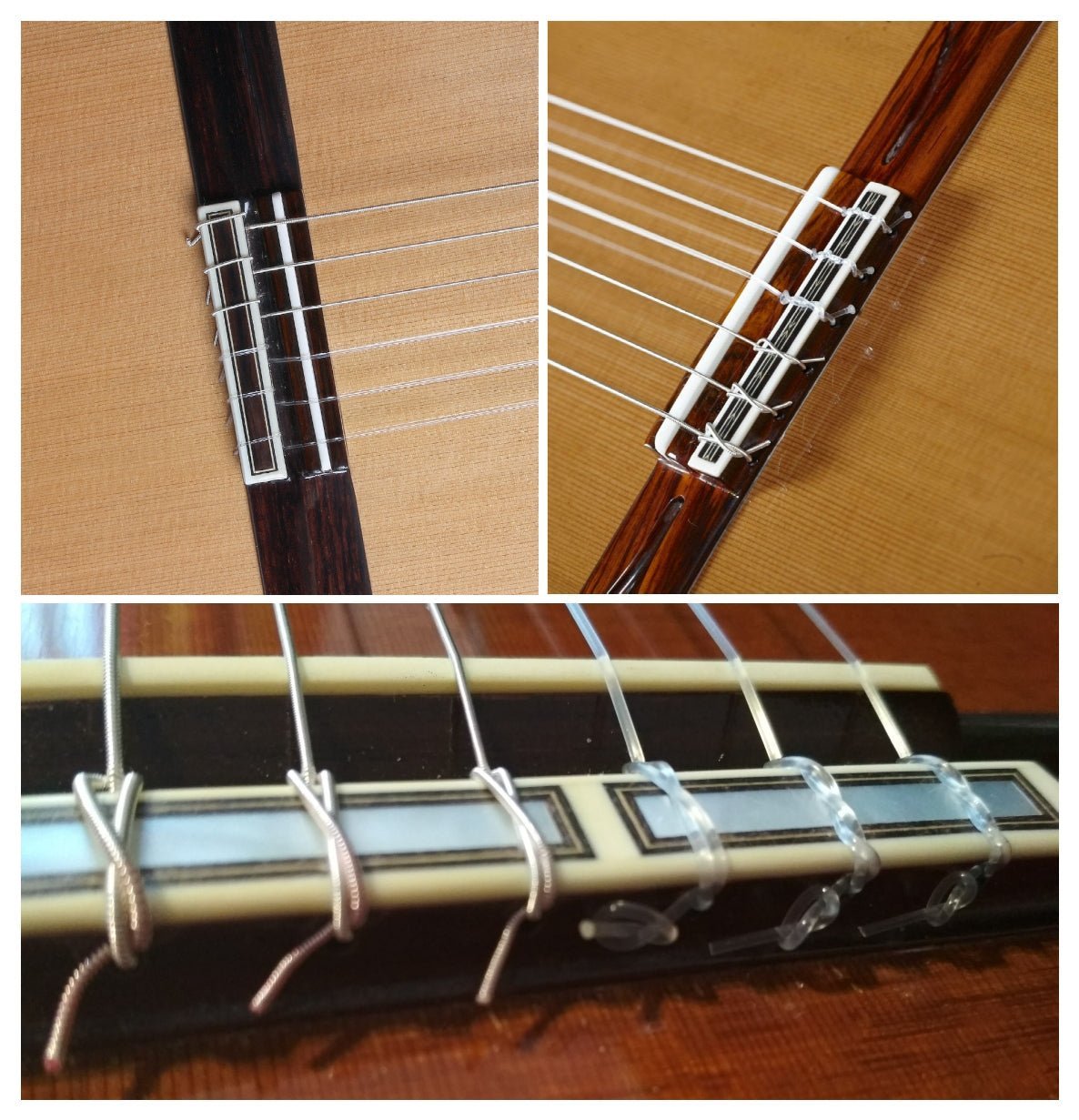
Classical guitars use a tie-block bridge, so a specific knot is required to secure the string.

Step 3: Secure the String at the Tuning Peg

  • Insert the free end of the string through the hole in the tuning peg.
  • Loop the string back over itself and under, then pull tight to create a secure knot.
  • Begin winding the string, ensuring the wraps are neat and spiral downward. For bass strings, wind toward the outside of the headstock; for trebles, wind toward the inside.
  • Maintain gentle tension as you wind to prevent slack and ensure tuning stability.

Tip: Use a string winder for faster, more consistent winding.

Step 4: Tune and Stretch

  • Bring the string up to pitch using a tuner, but do not overtighten.
  • Gently stretch the string by pulling it away from the fingerboard and retune. Repeat several times to help the string settle and stay in tune more quickly.
  • Trim any excess string at the bridge and headstock with wire cutters.

Step 5: Repeat for All Strings

Change each string one at a time, following the same process. The recommended order is: sixth (low E), third (G), fifth (A), second (B), fourth (D), and finally first (high E). This order helps balance tension and makes the process smoother.

* Watch the full video (option 1)

* Watch the full video (option 2):

Final Recommendations

  • Change strings regularly, at least every few months, or more often if you play daily or perform.
  • Wipe down your guitar and fretboard with a soft cloth before installing new strings.
  • Store your guitar in a suitable case and use a humidity control system for optimal care.
  • For more information on string selection, visit our classical guitar string collection.

Learning how to string a classical guitar is a rite of passage for every guitarist. With careful technique and respect for your instrument, you’ll enjoy better tone, tuning stability, and the satisfaction of caring for your guitar with your own hands. If you have questions or want to share your own tips, join the conversation in the comments or contact our specialist team.

Frequently Asked Questions

How often should I change classical guitar strings?

For those who play regularly, every 1 to 3 months is typical. Beginners can change them twice a year, but always replace them if they sound dull or feel rough.

How long do new strings take to settle?

Nylon strings can take anywhere from a few hours to several days to stretch and stabilize. Frequent tuning during the first days is normal.

How do I choose the right strings?

Select strings according to your guitar’s scale length, your playing style, and your desired tone. Tension (low, normal, high) affects feel and sound—experiment to find what suits you best.

Hai ancora fame?

CONTINUA A LEGGERE

¿Qué es un laúd? Significado, historia, tipos y diferencias - Alhambra Guitarras
laud

What Is a Lute? Meaning, History, Types & Differences

The lute is one of the most iconic and historically rich string instruments in world music. Instantly recognizable for its deep, rounded back and pear-shaped body, the lute has played a central rol...

Per saperne di più
Las mejores cuerdas para guitarra clásica - Alhambra Guitarras
cuerdas

Best Classical Guitar Strings: For Professionals & Beginners

The choice of classical guitar strings is key to unlocking your instrument’s full potential. Whether you’re an experienced concert performer, a dedicated student, or a passionate beginner, the righ...

Per saperne di più

Post del blog

ORGULLOSA DE SER AUTÉNTICA - Madera, raíces y la vibración de todo un país con nuestra Selección - Alhambra Guitarras
Yo si soy española

ORGOGLIOSA DI ESSERE AUTENTICA - Legno, radici e l'entusiasmo di un intero Paese con la nostra Selezione

Ci sono cose che non si possono fingere. Non si può fingere lo scricchiolio del legno antico, il profumo di ciò che è fatto per durare, né quel tuffo al cuore quando inizia a suonare l'inno ai Mond...

Per saperne di più
¿Qué define a una guitarra de calidad? El reconocimiento "Bien Hecho en España" a Alhambra Guitarras - Alhambra Guitarras
Bien hecho en España

Cosa definisce una chitarra di qualità? Il riconoscimento “Bien Hecho en España” ad Alhambra Guitarras

Alhambra Guitarras è stata insignita nel febbraio 2026 del prestigioso premio “Bien Hecho en España” (Ben fatto in Spagna) nella categoria Qualità. Questo premio, consegnato da S.M. il Re Felipe VI...

Per saperne di più
¿Cuál es la mejor guitarra? Calidad y Sostenibilidad en la Nueva Era de la Música - Alhambra Guitarras
Green Sustain

Qual è la chitarra migliore? Qualità e sostenibilità nella nuova era della musica

Cerchi la chitarra più adatta al tuo stile e alla tua coscienza? Scopri Green Sustain , la nostra esclusiva linea di chitarre di qualità con sostenibilità garantita, pensate per il musicista modern...

Per saperne di più
Guía Definitiva: Cedro Canadiense vs. Abeto Alemán en Guitarras Españolas - Alhambra Guitarras
blog

La guida definitiva: cedro canadese vs. abete tedesco nelle chitarre spagnole

La tavola armonica è spesso definita l'"anima" della chitarra. È responsabile della proiezione del suono e della definizione del carattere dello strumento. Se stai cercando una chitarra spagnola, p...

Per saperne di più
Las Mejores Guitarras Clásicas: Top 10 Guitarras Españolas 2026 - Alhambra Guitarras
Guitarra clásica

Best Classical Guitars: Top 10 Spanish Guitars

Classical guitars represent centuries of Spanish musical heritage, where master luthiers have perfected the art of creating instruments that stand out for their warmth, clarity, and soul. In 2025, ...

Per saperne di più
Las mejores cuerdas para guitarra clásica - Alhambra Guitarras
cuerdas

Best Classical Guitar Strings: For Professionals & Beginners

The choice of classical guitar strings is key to unlocking your instrument’s full potential. Whether you’re an experienced concert performer, a dedicated student, or a passionate beginner, the righ...

Per saperne di più
¿Cómo encordar una guitarra clásica?: Guía paso a paso - Alhambra Guitarras
cuerdas

How to String a Classical Guitar: Step-by-Step Guide

Changing the strings on your classical guitar is essential for maintaining its tone, projection, and playing comfort. While it may seem complicated at first, with the right technique and a bit of p...

Per saperne di più
¿Qué es un laúd? Significado, historia, tipos y diferencias - Alhambra Guitarras
laud

What Is a Lute? Meaning, History, Types & Differences

The lute is one of the most iconic and historically rich string instruments in world music. Instantly recognizable for its deep, rounded back and pear-shaped body, the lute has played a central rol...

Per saperne di più
Las 6 mejores guitarras por menos de 1.000 euros - Alhambra Guitarras
guitarras

Best Guitars Under €1,000: Top 10 Spanish Models

Finding the best guitars under €1,000 is not just about price—it’s about discovering instruments that inspire, endure, and reflect true Spanish craftsmanship. At Alhambra, we believe that excellenc...

Per saperne di più